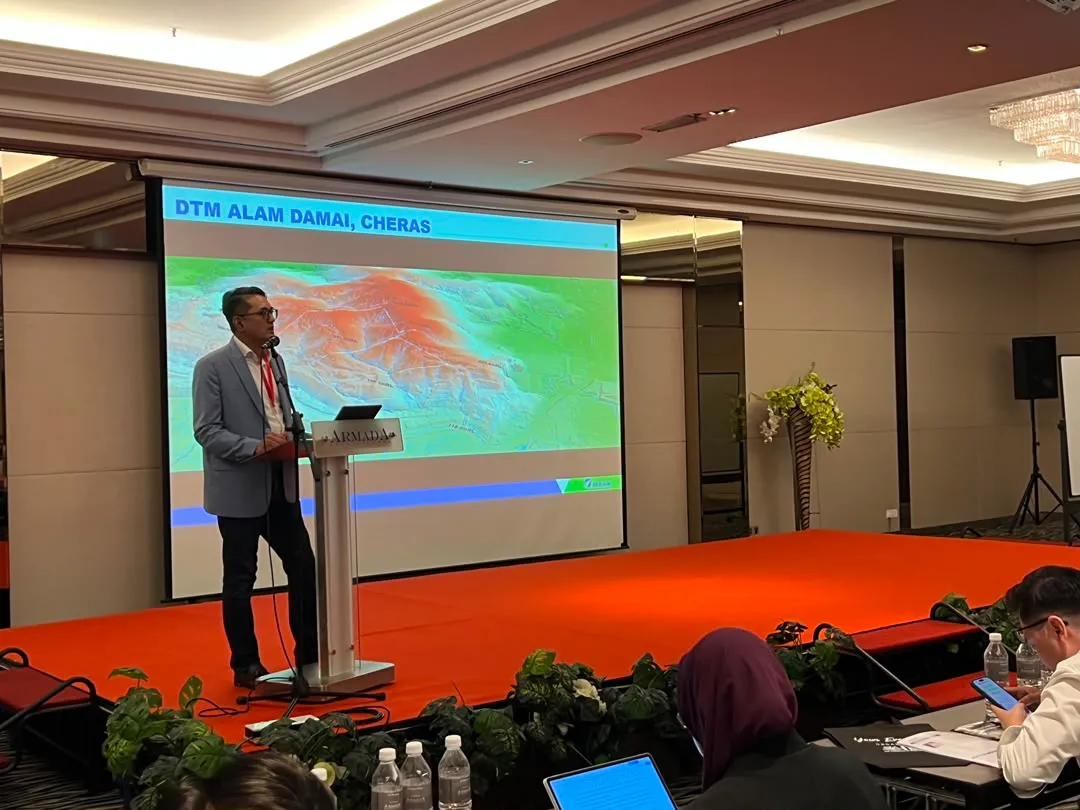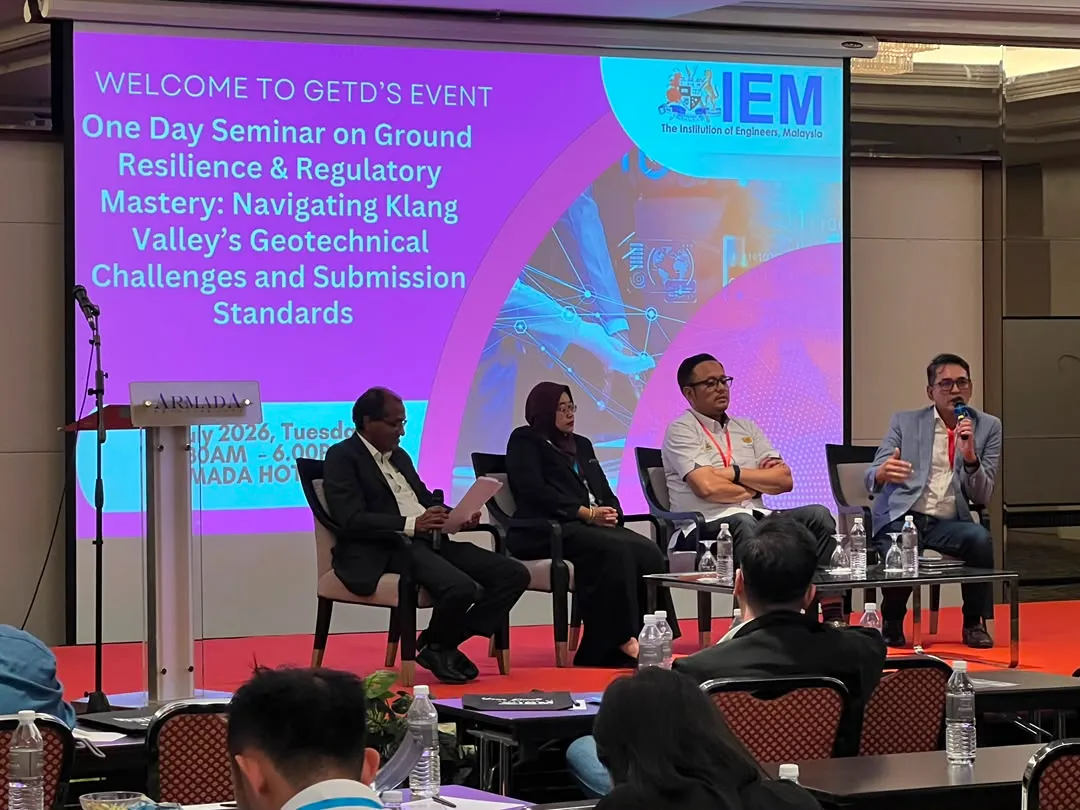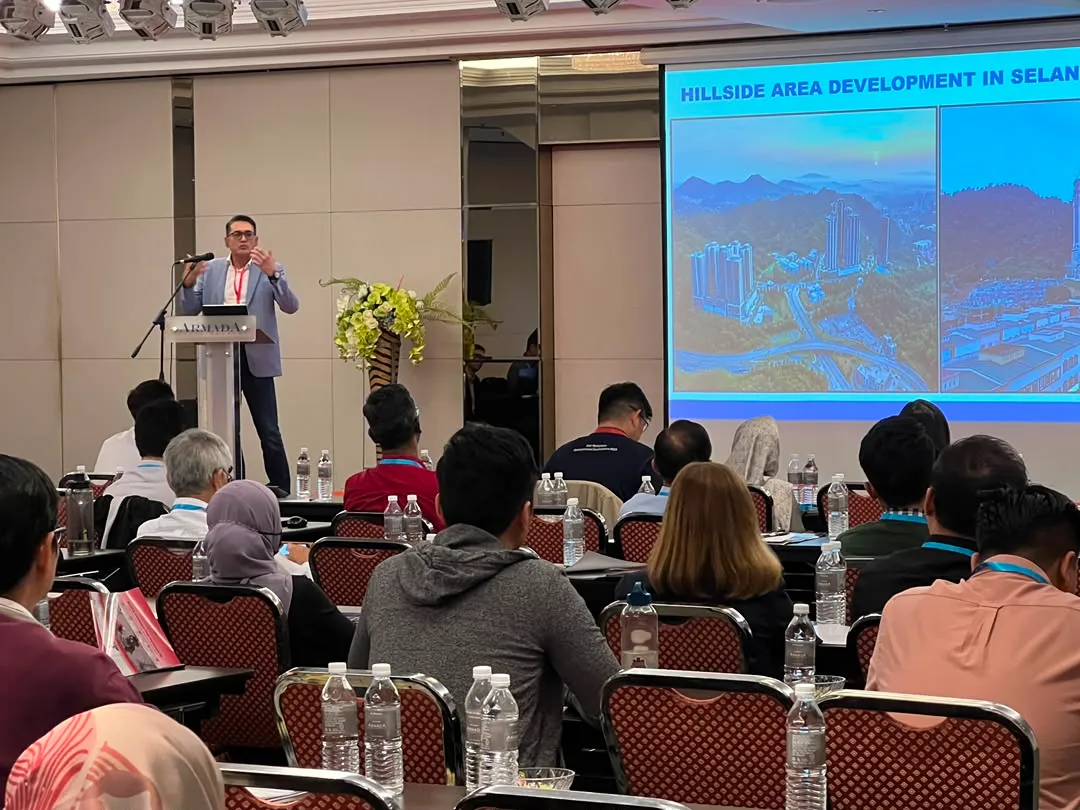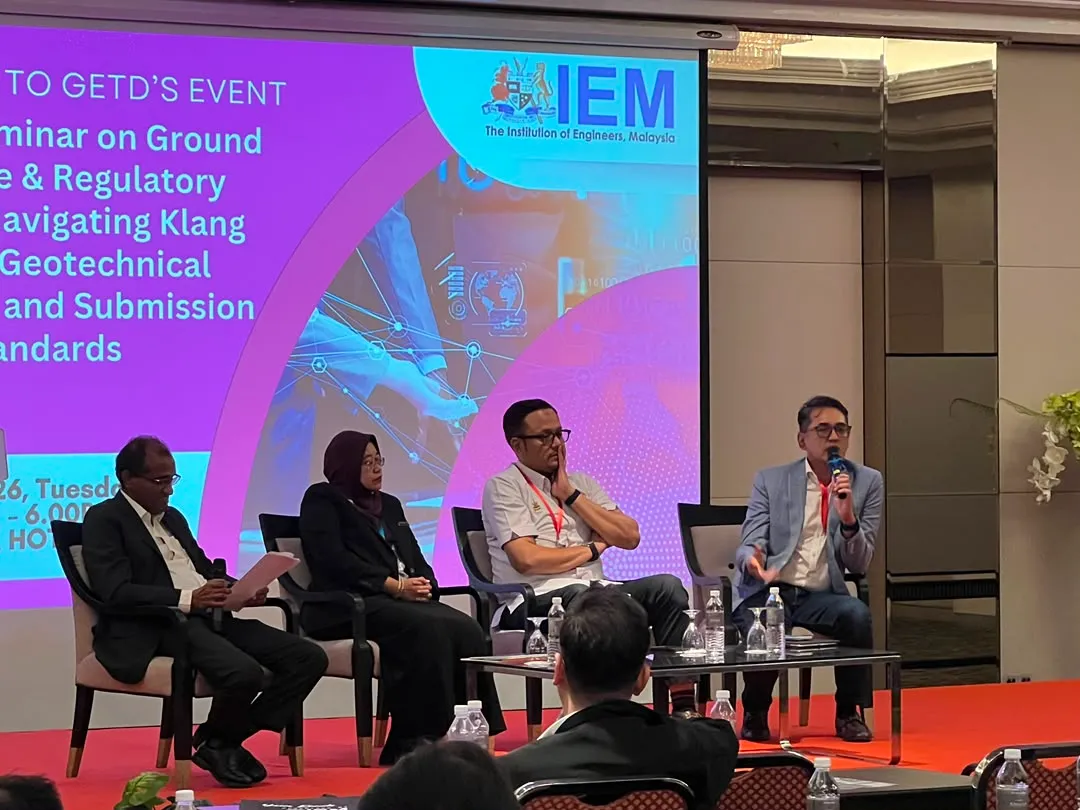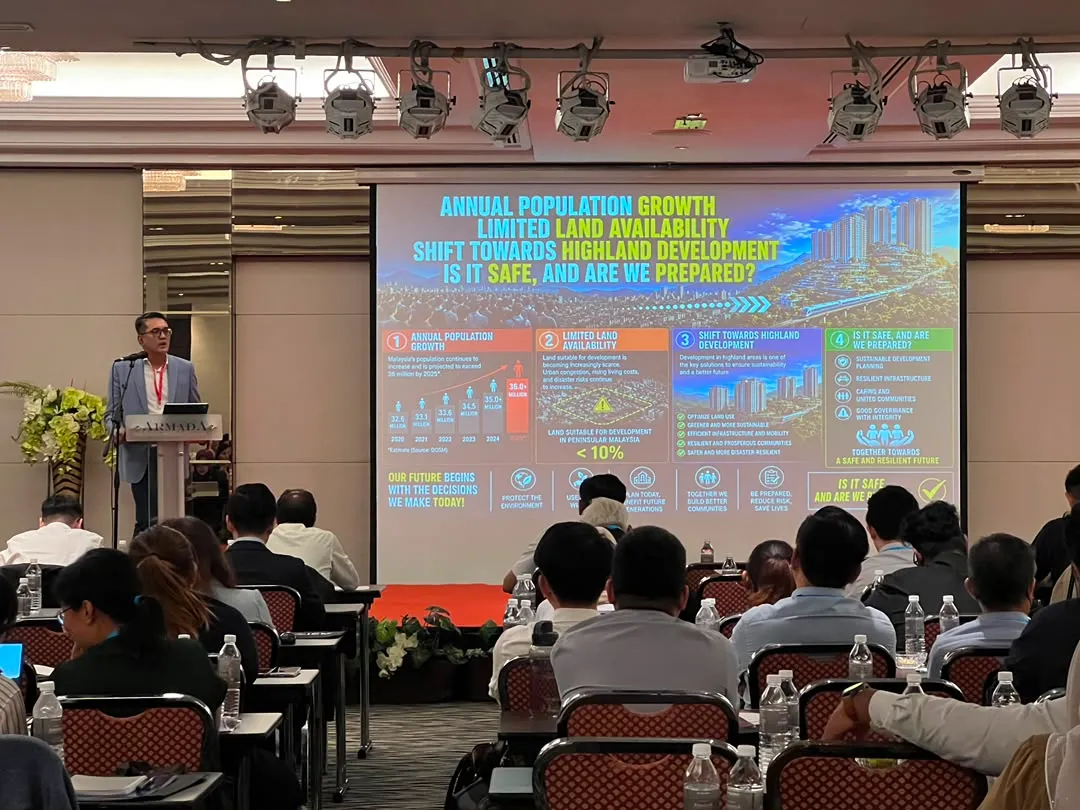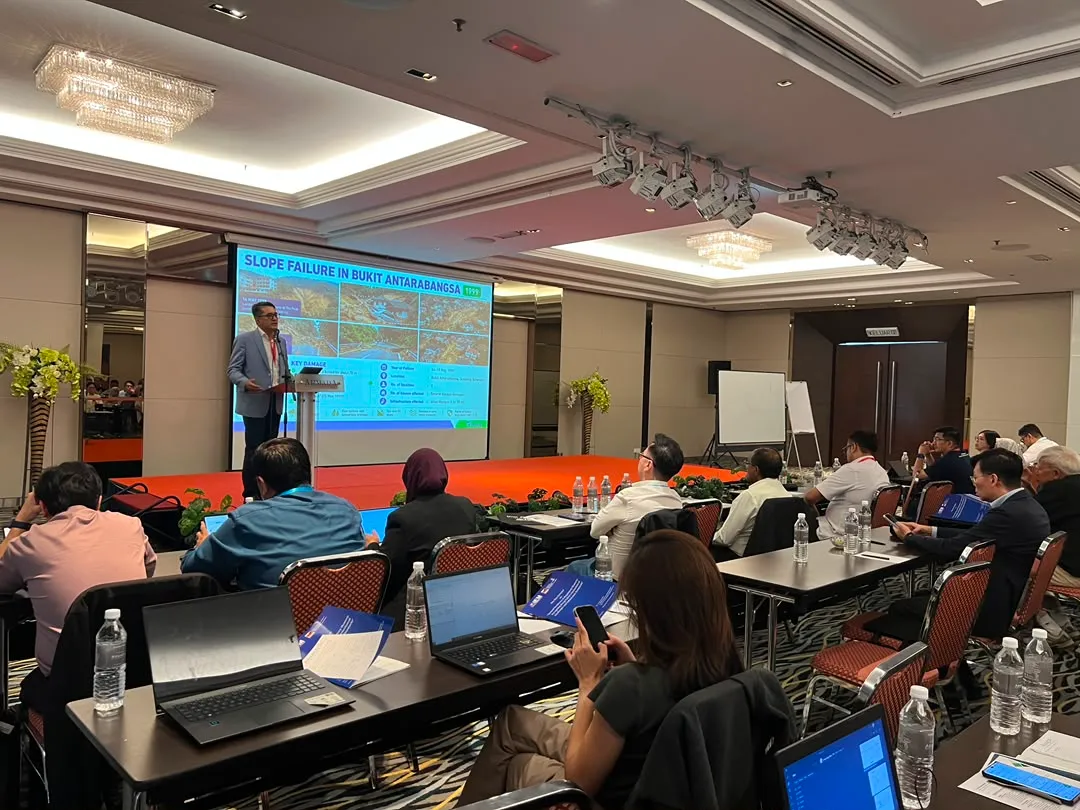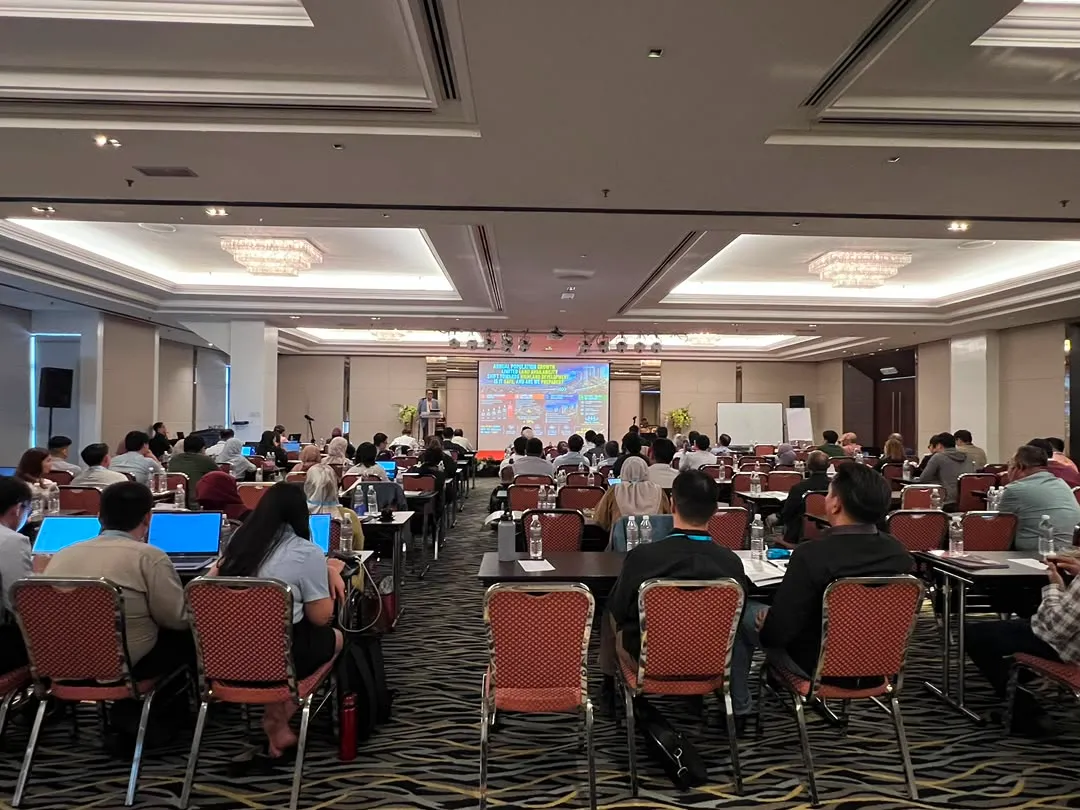
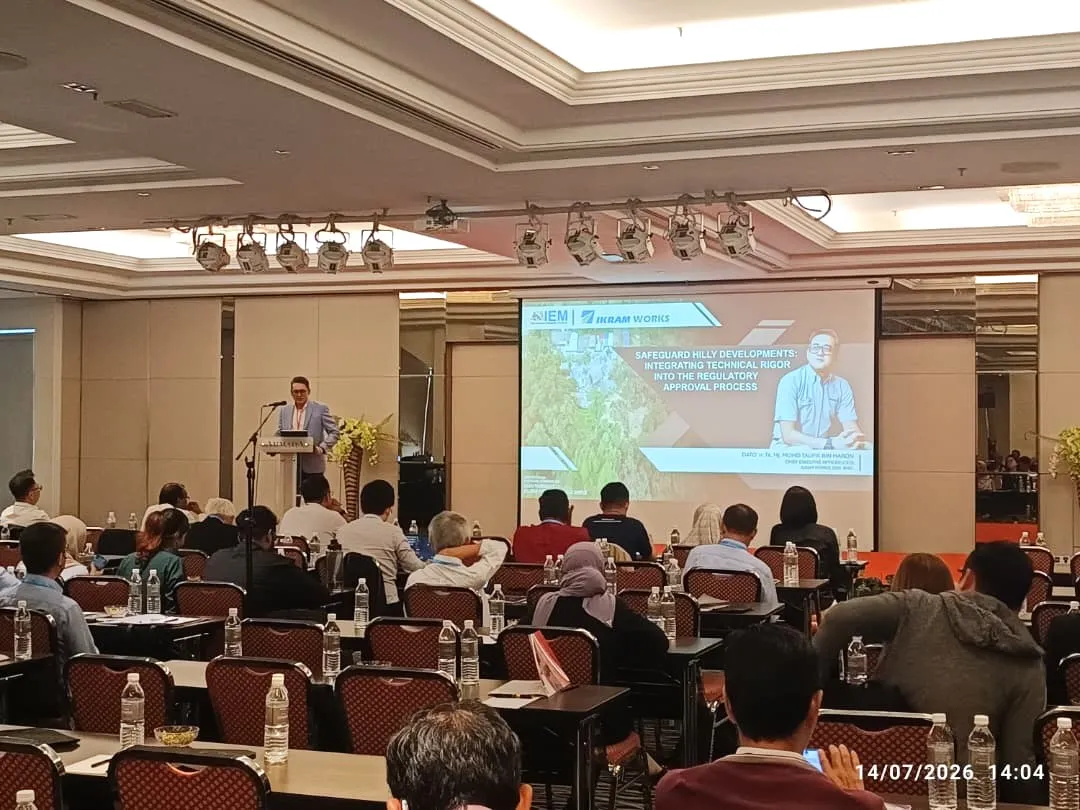
Petaling Jaya, 14 July 2026 – The Geotechnical Engineering Technical Division of The Institution of Engineers, Malaysia (IEM) successfully organized the One Day Seminar on Ground Resilience & Regulatory Mastery: Navigating Klang Valley’s Geotechnical Challenges and Submission Standards at Armada Hotel, Petaling Jaya. The seminar gathered engineering professionals, regulators, consultants, developers, local authorities, and academicians to exchange knowledge on addressing the increasing geotechnical challenges associated with rapid urban development in the Klang Valley.
Among the distinguished speakers was Dato’ Ir. Ts. Hj. Mohd Taufik Bin Haron, Chief Executive Officer of IKRAM Works Sdn. Bhd. (IKRAM), who was invited to deliver a keynote presentation and participate in the panel discussion. His presentation, titled “Safeguard Hilly Developments: Integrating Technical Rigor into the Regulatory Approval Process,” highlighted the growing need to strengthen engineering practices and regulatory processes as development continues to expand into increasingly challenging hilly terrain.
Dato’ Taufik began by highlighting how rapid urbanisation and population growth have accelerated hillside developments throughout Malaysia, particularly within the Klang Valley. While such developments are inevitable to meet future housing and infrastructure demands, they also introduce greater geotechnical complexity and higher risks if not supported by rigorous engineering assessments and sound regulatory oversight.
He emphasised that the responsibility for ensuring safe hillside development extends beyond a single organisation or profession. Successful projects require close collaboration among developers, geotechnical engineers, civil and structural engineers, town planners, local authorities, technical agencies, contractors, reviewers, and maintenance authorities. Each stakeholder plays a critical role in ensuring that engineering decisions are technically sound and that public safety remains the highest priority throughout the project lifecycle.
To reinforce this message, Dato’ Taufik presented several global landslide case studies, illustrating how many catastrophic slope failures were linked not only to natural conditions but also to inadequate site investigations, poor drainage systems, insufficient geological understanding, weak regulatory enforcement, construction deviations, and inadequate long-term maintenance. He stressed that while natural hazards cannot always be prevented, engineering failures resulting from insufficient technical diligence are often avoidable.
A significant portion of the presentation focused on the scientific principles of slope stability analysis and the importance of understanding the interaction between geological conditions, groundwater behaviour, laboratory testing, and engineering modelling before any design decisions are made. He explained that the reliability of engineering analysis depends fundamentally on the quality of field investigations and technical data collected during the early stages of a project.
Dato’ Taufik also discussed the importance of the Factor of Safety (FOS) in slope engineering, cautioning that compliance with a numerical value alone should never be considered sufficient. Instead, engineers must understand the assumptions, uncertainties, geological conditions, and consequences of failure associated with each project. He noted that engineering judgement remains equally important alongside analytical calculations when designing safe and resilient slopes.
One of the key messages delivered during the session was the critical importance of rigorous geotechnical investigations. Dato’ Taufik emphasised that comprehensive geotechnical reports should incorporate geological mapping, borehole investigations, geophysical surveys, groundwater assessments, laboratory testing, engineering interpretation, hazard identification, and practical design recommendations. He reminded participants that a geotechnical report should not be viewed merely as a regulatory requirement, but as the technical foundation upon which every engineering decision is built. He further highlighted that many documented slope failures have occurred at locations where technical investigations were either insufficient or lacked the necessary level of engineering rigor.
Looking towards the future of engineering practice, Dato’ Taufik introduced the role of Building Information Modelling (BIM) in transforming the planning, design, construction, operation, and maintenance of hilly developments. He demonstrated how BIM enables multidisciplinary coordination by integrating geotechnical, structural, drainage, and infrastructure information within a single digital environment, allowing stakeholders to improve design coordination, identify potential conflicts before construction, optimise project scheduling and cost management, and support long term asset management. He also shared the potential of integrating BIM with Geographic Information Systems (GIS), Internet of Things (IoT) technologies, and digital twin platforms to enhance slope monitoring, risk management, and disaster resilience.
In concluding his presentation, Dato’ Taufik called for a shift from a compliance driven approach towards one centred on engineering excellence, technical integrity, and evidence-based decision-making. He stressed that the true objective of the regulatory approval process is not merely to satisfy submission requirements, but to ensure that every approved development is founded upon comprehensive technical investigations, sound engineering principles, and long-term public safety considerations. He also emphasised that investing in rigorous engineering assessments at the planning stage represents a far more economical and responsible approach than bearing the significant financial, environmental, and social consequences of slope failures after they occur.
The presentation was well received by participants and generated engaging discussions during the subsequent panel session, where experts exchanged views on improving regulatory frameworks, strengthening multidisciplinary collaboration, embracing digital technologies, and advancing engineering best practices for safer hillside developments. IKRAM’s participation in this prestigious IEM seminar reflects the company’s continued commitment to promoting engineering excellence, advancing digital construction through Building Information Modelling (BIM), and supporting the development of safer, more resilient, and sustainable infrastructure for Malaysia.
For more information on this or other event, interested parties can visit our website or direct contact for inquiries.
Contact Information:
Website: www.ikram.com.my
P.I.C: Ts. Farhan Hasan
Email: farhan@ikram.com.my